
What does a field have to do with mathematics? What does cooking have to do with science? And what do young people learn when their work is genuinely needed?
With her Erdkinder plan, Maria Montessori offered an answer to the question of how young people can become independent and find their place in society.
At IMS, this approach is becoming an important part of learning as we expand our Gemeinschaftsschule (community school) from Year 7 in the German school system onwards. It combines academic knowledge with practical work and experience of society. The young people organise themselves, work together and discover that their actions make a difference.
Out of the classroom and into life
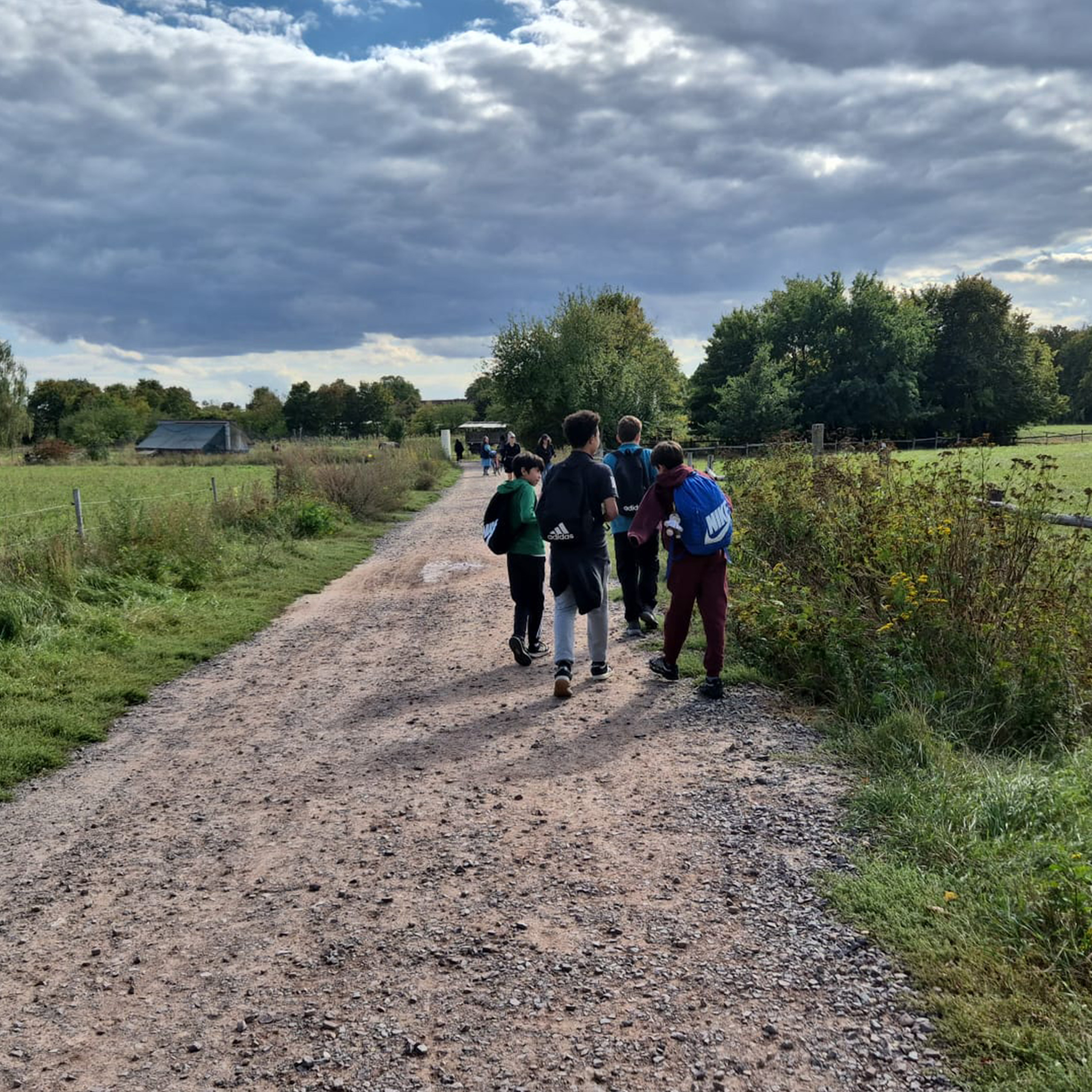
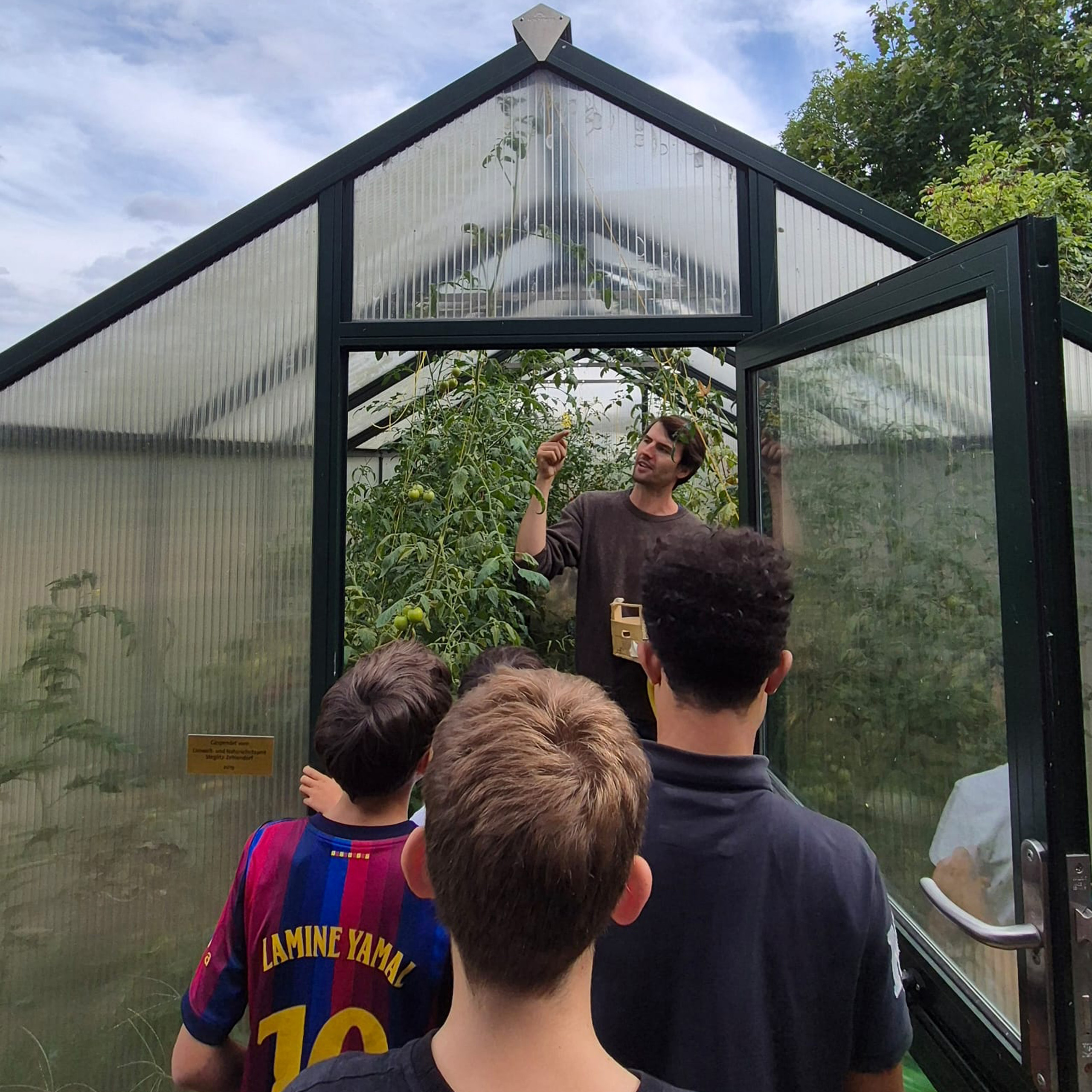
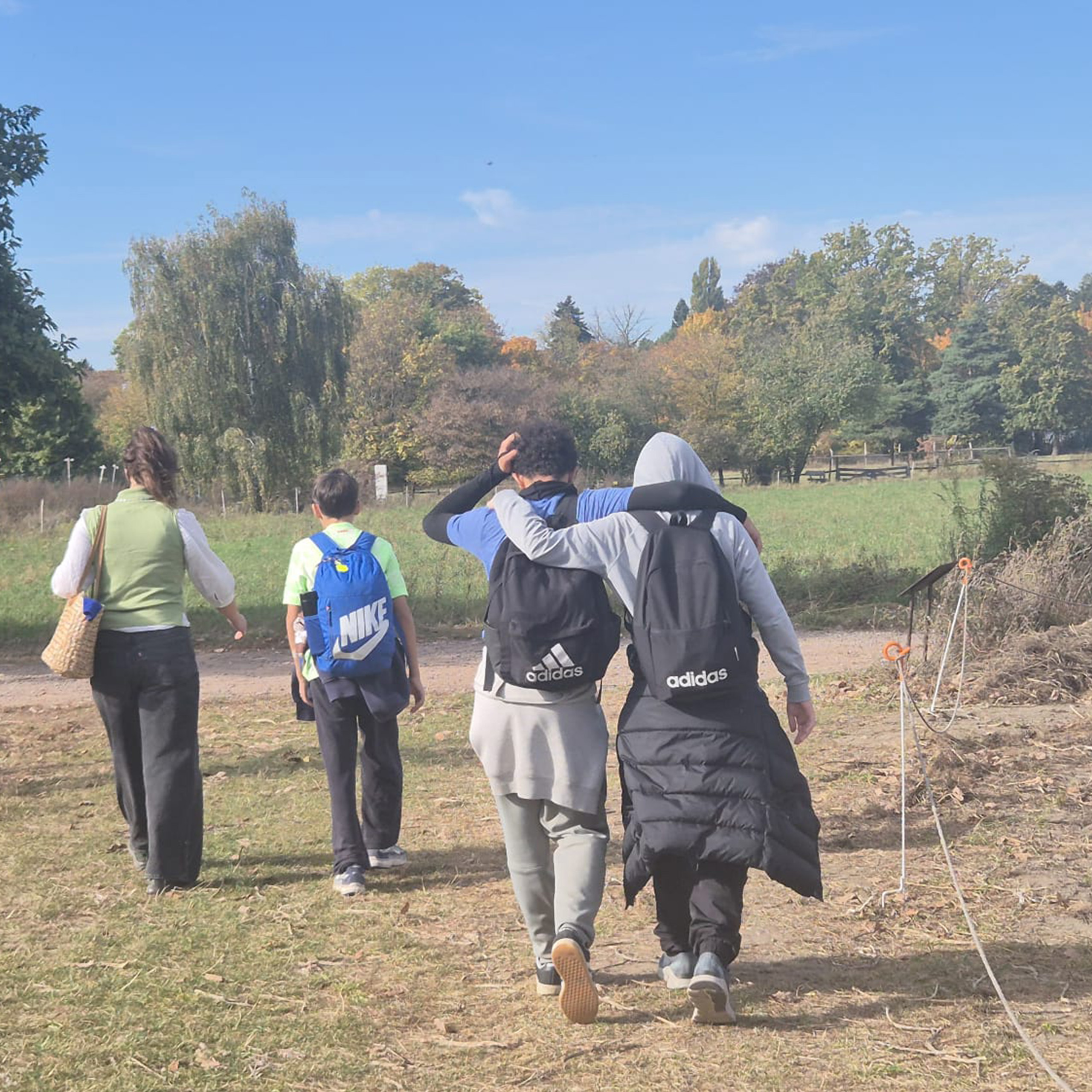
A special partner in this endeavour is Domäne Dahlem. The country estate and open-air museum bring together organic farming, food and sustainability. Fields, an educational garden, a workshop, a teaching kitchen and a bee house offer a wide range of opportunities to get involved.
Here, the educational ideas of IMS meet the opportunities offered by Domäne Dahlem.
Through our partnership, young people can explore agriculture and food, sustainability, the circular economy, crafts, science and economic activity. This may include working in the fields, the teaching kitchen or workshops, or taking part in beekeeping. Their experiences feed into WAT lessons (work, economics and technology) and other subjects.
From doing to understanding
This is not simply about taking lessons outdoors: the place itself becomes the focus of learning.
The young people plan, produce, calculate costs and reflect. They develop their own products and weigh up environmental, economic and social considerations.
This can lead to questions such as:
Where does our food come from, and how is it grown and processed?
How do you calculate the cost of a product you have made?
What does operating sustainably mean for resources, animals and the environment?
How can we take collective responsibility for an outcome?
In this way, connections emerge between individual subjects, and theory becomes first-hand experience.
Why adolescence?
Maria Montessori saw adolescence as a distinct stage of development. Young people need intellectual challenges as well as real social experiences. The Erdkinder plan therefore forms a cornerstone of our secondary education: it connects thinking with doing and creates opportunities to take responsibility for themselves and others.
For us, school is a place for both learning and living. We want to help young people become independent and play an active part in shaping their world.
A partnership that brings Montessori to life
Our partnership with Domäne Dahlem brings the Erdkinder plan to life in the heart of Berlin. Here, our pupils can get stuck in, observe, make mistakes and develop solutions.
Because Montessori education does not stop at the classroom door – for young people, an important part of learning is only just beginning there.